
May 30, 2024
Wild Cistanche Tubulosa
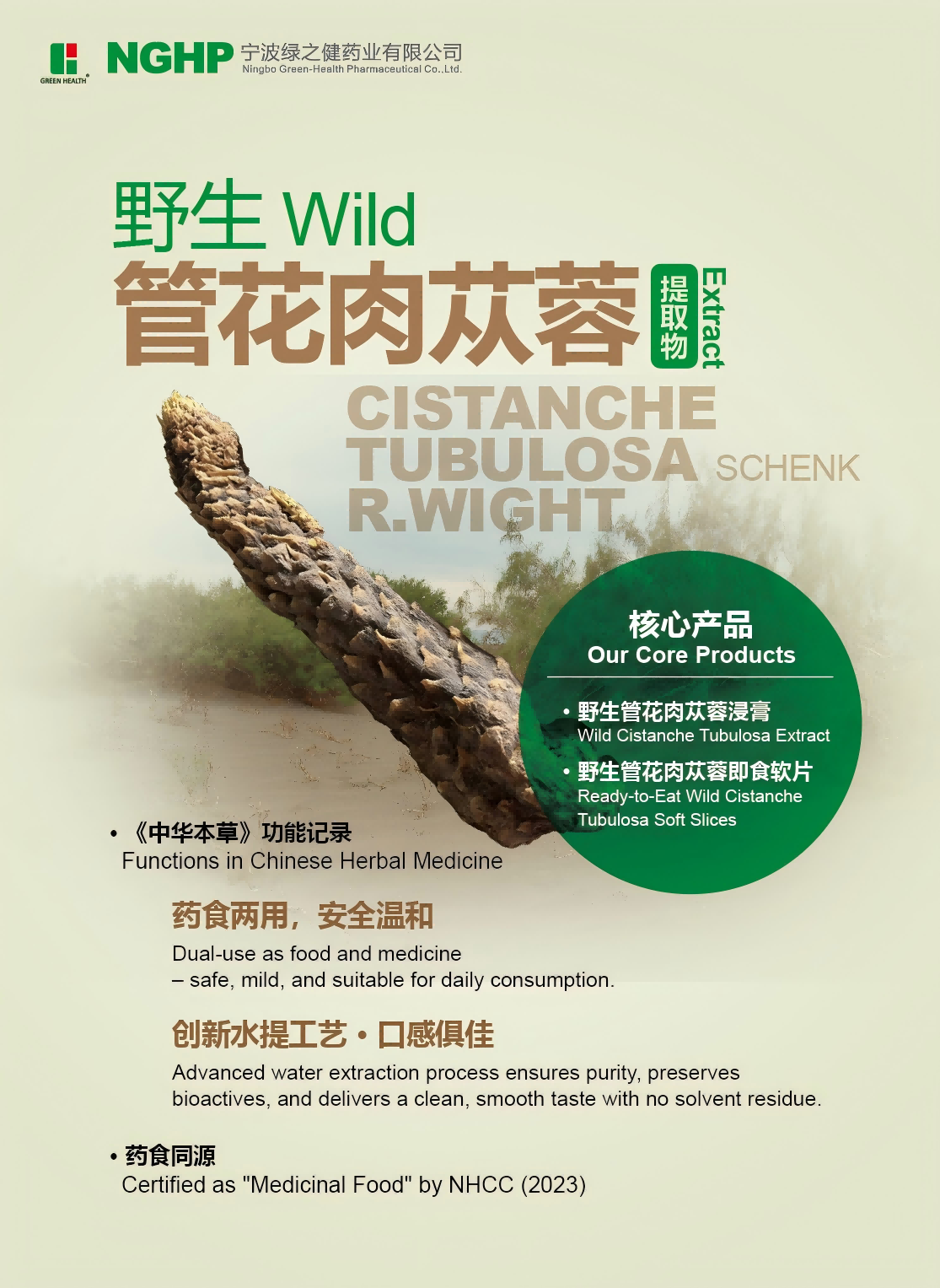
Cistanche Tubulosa (Schenk) Wight, commonly known as Tubulosa, is a perennial parasitic herb belonging to the Orobanchaceae family and the genus Cistanche. The plant can grow up to 100 centimeters tall, blooming from May to June and bearing fruit from July to August. It is widely distributed in northern Africa, the Arabian Peninsula, Pakistan, India, and Central Asia all the way to Russia. It is also found in southern Xinjiang, China. It grows in the relatively moist tamarisk thickets and sand dunes at an altitude of 1,200 meters, and often parasitizes on the roots of Tamarisk plants. Cistanche tubulosa, which is included in the 2010 edition of the Chinese Pharmacopoeia, is a genuine medicinal material.
- The dried fleshy stem of Cistanche tubulosa with scaly leaves is warm in nature and sweet and salty in taste. It is a key medicine for tonifying the kidney and strengthening Yang, as well as moistening the intestines and promoting defecation. It is known as the “ginseng of the desert”.
- The Compendium of Materia Medica records: “This substance is nourishing but not harsh.” All the envoy must first be soaked in clear wine for one night. At dawn, the sand and loose armor should be brushed off with a brown brush, and the center should be split open to remove a layer of white film like bamboo threads and grass. This can prevent the spirit from dissipating and make people feel angry. It is steamed with a sieve, taken out from noon to the day of the Rooster, and then fried with a puff pastry."
- Cistanche tubulosa has certain anti-aging effects, endocrine regulation, metabolic promotion and strengthening effects.
- Cistanche tubulosa is a precious traditional Chinese medicine that regulates the immune function of the body. It can stimulate the pituitary gland and adrenal cortex or has an effect similar to that of adrenal cortical hormones.